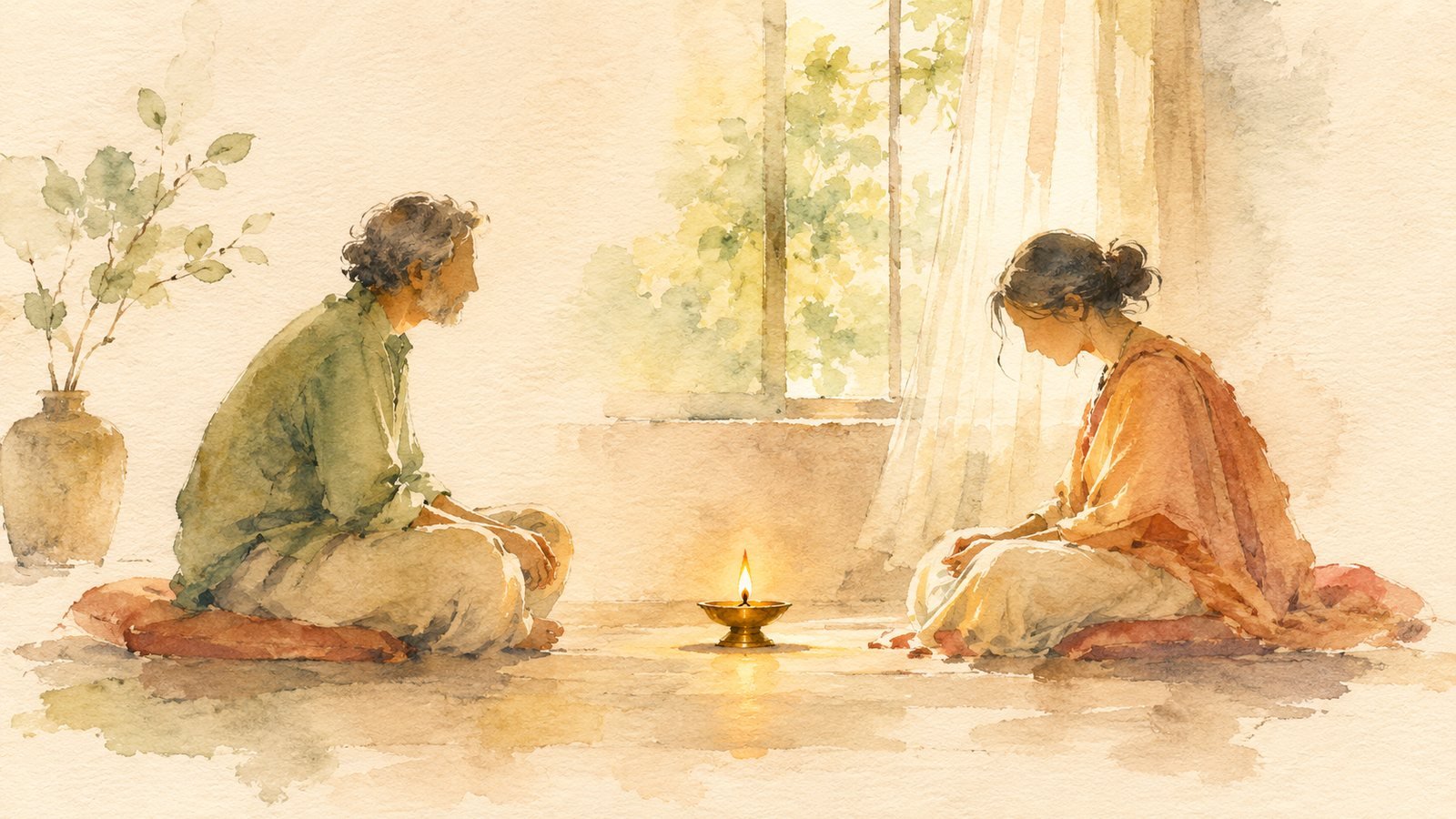

Marshall Rosenberg took one idea further than most people expect, far enough that audiences sometimes laughed nervously when they heard it. He wondered aloud what life would be like if we never did anything that was not, in his sense, play. He was not asking us to pretend that difficult things are enjoyable. He was pointing toward what action feels like when it is no longer driven by coercion.
Most of us know the other experience well. We carry a fantasy in which there is the real me, who would live freely if only life allowed it, and the life I actually live, which is a long corridor of have to. Freedom, in this fantasy, waits at the end of the corridor, on some future day when the obligations finally thin out.
Marshall treated have-to language as one of the most corrosive forms of life-alienating thinking, and not as a small matter. When I tell myself I have to, I lose contact with my own agency. Someone else made me do it. Circumstances made me do it. And when we act from guilt or obligation, the person receiving our gift often senses the cost at which it was given. The gift arrives with an invisible bill attached.
An exercise dismantles the fantasy quietly. Write down everything you tell yourself you have to do. Then translate each item:
I choose to do ___ because I care about ___.
Not as positive thinking but as accuracy. Because the plain fact that the have-to grammar exists to conceal is that we are choosing, all day long, in service of things we care about.
The Bhagavad Gita has been sitting with this same question for a very long time. Arjuna, standing in the field of action, wants to withdraw from it altogether. Krishna’s answer has lost none of its force:
No one can remain without acting, even for a moment.
If freedom exists, it cannot mean freedom from action. It must be found within action. This is Karma Yoga.
The Gita also names two ways of being caught, which look like opposites but are secretly related. The first says I am forced, and leaves us powerless. The second says I alone am the doer, and burdens us with a control we never actually had. Both keep us locked in a struggle with life.
Read alongside NVC, the traditions illuminate each other. NVC looks beneath behaviour toward needs. Karma Yoga looks beneath action toward our relationship with action itself. Together they replace What do I have to do? with a better question:
What am I choosing, and what is this choice in service of?
Sometimes the translation will not work. You will reach an item and find no real reason beneath it, only guilt or habit. That is worth knowing too. Some have-to’s are choices we have forgotten we made. Others are choices that are ready to end.
Everything else remains as it was. The work is still work. The difficult conversation is still difficult.
What changes is that you are no longer divided against the action.
This article is an excerpt from Chapter 12 of my book Spiritual Heart of Nonviolent Communication: Tracing Its Roots in the Ancient Wisdom Traditions of India, now available on Amazon.